
Most conversations about AI and jobs are told from the candidate’s side: which roles will change, which tools to learn, how to use AI in an application. This post flips the view. What are employers actually looking for when they hire tech talent in a world where AI agents are joining the team?
The short answer: they want people who can use AI well, judge its output, and do the human work that agents can’t. Here’s what that means in practice, what the research says, and how to show it, whether you’re interviewing this month or meeting employers at the Valencia Tech Job Fair on Thursday 6 May 2027.

Agents are moving from pilot to practice
Employers are no longer just experimenting. Microsoft’s 2025 Work Trend Index, based on a survey of 31,000 workers in 31 countries, found that 81% of leaders expect agents to be moderately or extensively integrated into their company’s AI strategy within 12 to 18 months. The same report describes a shift from AI as an assistant to agents acting as “digital colleagues” that take on specific tasks at human direction.
That changes what a strong hire looks like. The question is no longer whether you’ve tried AI tools. It’s whether you can work productively alongside them.
What employers are prioritising
The World Economic Forum’s Future of Jobs Report 2025 gives the clearest employer-side view. Employers surveyed expect 39% of workers’ core skills to change by 2030, and they rank AI and big data as the fastest-growing skills, followed by networks and cybersecurity and technological literacy. Alongside those, they expect creative thinking, resilience, flexibility and agility, and curiosity and lifelong learning to grow in importance.
In other words, employers want both halves: technical fluency with AI, and the human strengths that make that fluency useful.
Microsoft’s research points the same way. Leaders named upskilling existing employees as their top workforce strategy, and 78% said they were considering hiring for AI-specific roles. The report also notes that LinkedIn ranked AI literacy as the most in-demand skill of 2025.

Six things employers want from tech hires
Putting that research together, these are the qualities that stand out:
- Practical AI fluency. Not just “I use ChatGPT”, but concrete examples: how you’ve used AI to write tests, analyse data, speed up research or automate a workflow, and what changed as a result.
- Judgement and verification. Agents can be confidently wrong. Employers want people who check outputs, spot weak reasoning and know when not to trust a result. Microsoft describes this as treating AI as a thought partner: iterating, refining drafts and knowing when to push back.
- Knowing what to delegate. Strong candidates can explain which tasks they’d hand to an agent, which they’d keep, and why. That’s the beginning of managing “human-agent teams”, a theme running through the Microsoft report.
- Security and data awareness. With networks and cybersecurity among the WEF’s fastest-growing skills, employers value people who think about what data goes into AI tools and how agent-driven systems could be misused.
- Experience and depth. AI hasn’t removed the need for experienced people. In Barcelona, for example, Mobile World Capital’s Digital Talent Overview 2026 found demand growing for mid-level and senior professionals, noting that the market “is looking for experience”. Deep domain knowledge is what lets you direct AI well.
- Communication and collaboration. As routine tasks shift to agents, the human parts of the job (understanding stakeholders, explaining trade-offs, working across teams) carry more weight.
Daily AI use is already the norm in tech teams
If you’re wondering how widespread AI use is among developers, a recent survey from Spain is telling. Mobile World Capital’s survey of Barcelona’s software developers and digital professionals found that 72.58% use AI tools every day, and only 0.54% never use them. Respondents rated AI most useful for explaining existing code, writing documentation and helping develop new code, and were more cautious about fully delegated uses such as “vibe coding” or automatic test generation.
That’s a useful benchmark for interviews. Employers increasingly assume you use AI. What sets you apart is how thoughtfully you use it.
Regulation is shaping employer expectations too
In Europe, AI literacy isn’t just a nice-to-have. Under Article 4 of the EU AI Act, providers and deployers of AI systems must take measures to support the AI literacy of their staff. For employers, that makes candidates who already understand AI’s capabilities and limits easier to onboard. For you, it’s a reason to mention any AI training, certifications or responsible-use practices on your CV.

How to show it in your CV and interviews
- Add one or two specific AI examples to your CV. For instance: “Built an internal AI agent to triage support tickets, reducing first-response time.” Only use outcomes you can genuinely evidence.
- Prepare a “how I use AI” answer. Explain the tools you use, how you check results and where you draw the line.
- Show judgement with a story. A time you caught an AI error, or decided not to automate something, is often more convincing than a list of tools.
- Keep the human skills visible. Mention collaboration, mentoring and stakeholder work, not just technical tasks.
- Make your CV easy to scan. If you’d like expert help presenting your experience, our Professional CV Rewrite, Redesign & Proofreading service (€49) includes an ATS-friendly CV, LinkedIn profile text and banner, and a targeted cover letter once your target role is known.
For employers: hiring for the agent era
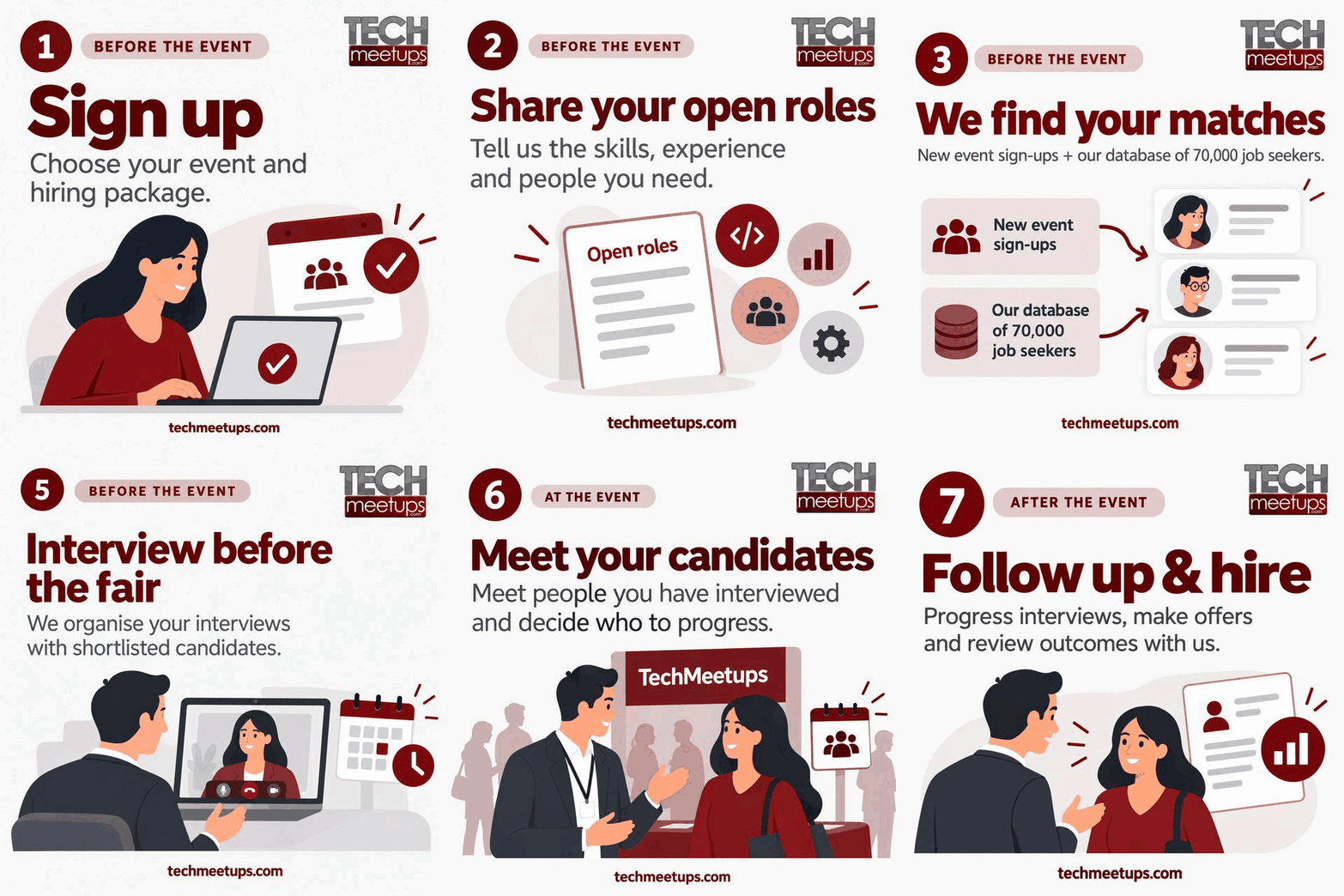
If you’re hiring, be specific about what AI fluency means in the role. “Experience with AI” in a job advert attracts everyone; “uses AI-assisted development and can review and test generated code” attracts the people you need. In interviews, ask candidates to walk through a real example of using AI and how they validated the result. And meet people in person where you can: conversations reveal judgement and communication far better than a CV can.
Meet employers at the Valencia Tech Job Fair
The Valencia Tech Job Fair 2026 takes place on Thursday 6 May 2027, 18:00–21:00, at Hotel ILUNION Valencia 4 (Carrer de la Vall d’Aiora 1, València). It focuses on software engineering, data analytics, cybersecurity and UX/UI design, as well as sales, marketing, finance and operations.
Bring a CV with concrete examples of how you work with AI, and a short introduction that shows both your technical depth and your judgement. Employers can find exhibitor and hiring packages on the event page.
The human edge still wins
AI agents are changing how tech work gets done, but employers aren’t looking for people who can be replaced by an agent. They’re looking for people who can make agents useful: fluent, sceptical, experienced and good with other humans.
Get your ticket for the Valencia Tech Job Fair, 6 May 2027, and make sure your CV shows your AI skills clearly with our CV Rewrite service.
See all upcoming TechMeetups job fairs.