
Hiring at a job fair used to mean standing at your stand and hoping the right people walk past. With TechMeetups Talent Matching, the conversation starts before the event. You tell us who you need, we find people who fit, and you arrive with a head start.
Here is how it works, step by step.
Watch: Interview Before the Job Fair | How TechMeetups Works
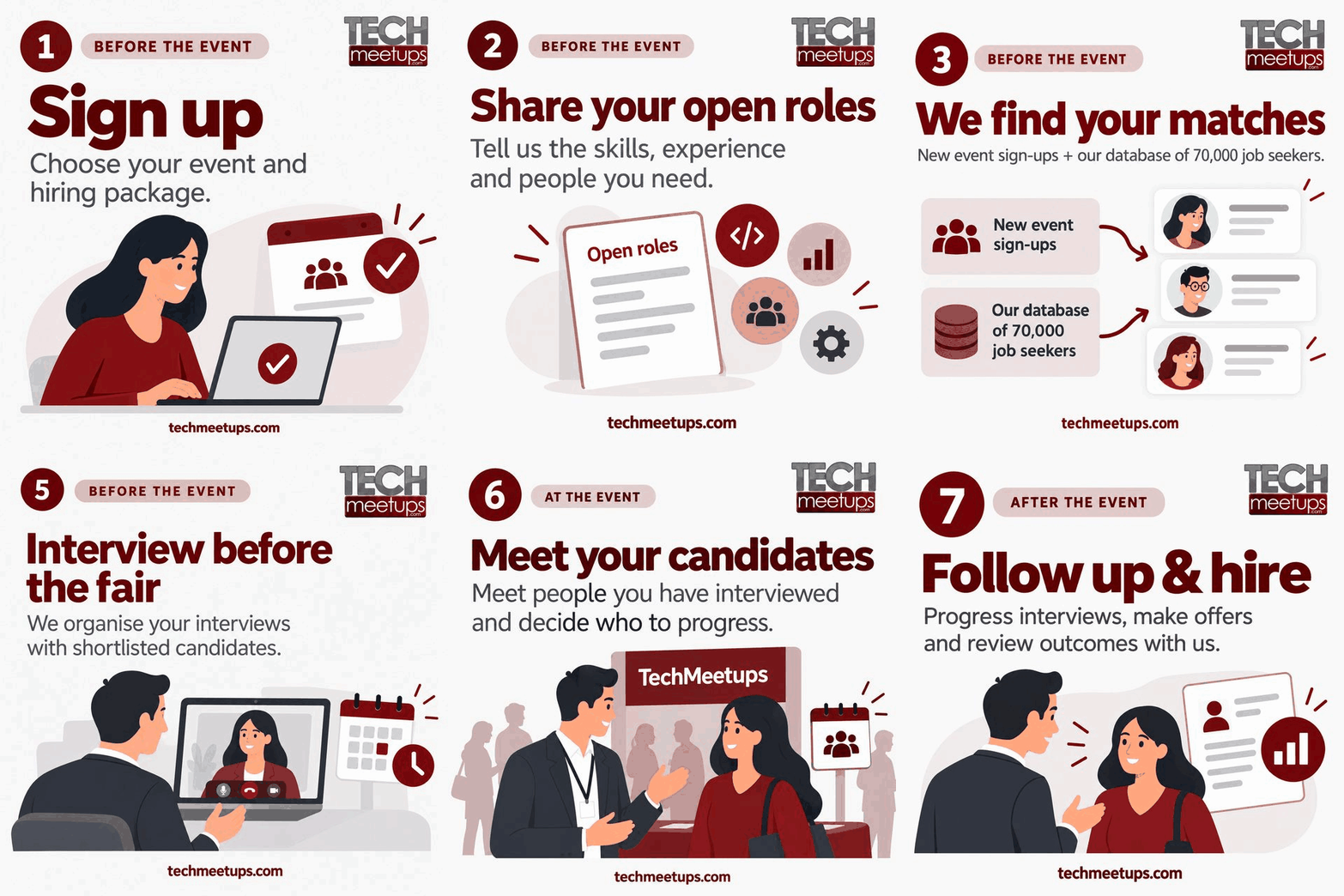
Your hiring journey at a glance
Seven steps take you from sign-up to follow-up. Here is each one in plain English.
Getting started
1. Sign up

- What you do: Choose the event you want to attend and the hiring package that fits your plans, then complete your sign-up. Pick the fair that is easiest for your target candidates to reach, and the package that suits your hiring plans.
- What we do: We agree your hiring goals and package with you, so we both start from the same plan.
- Why it helps: Signing up gives your hiring a clear starting point. The earlier you join, the more time there is to prepare before the fair.
Tip: Decide who in your company will be the main contact before you sign up. For instance, a small software company might name its head of engineering or an HR manager, so questions about roles can be answered quickly.
2. Share your open roles

- What you do: Tell us which roles you are hiring for, the essential skills you need, the level of experience, the location and when you are available to interview. Tell us what is flexible too, such as remote or hybrid work, or a skill you are happy to train.
- What we do: We use your brief as the starting point for the matching process, so the search is based on the roles, skills and experience you described.
- Why it helps: A clear brief gives the matching process something concrete to work from, so the people put forward are more likely to be relevant to your roles.
Tip: Separate the must-haves from the nice-to-haves. For instance, a company hiring a backend developer might write: must have three years of experience with one main programming language, nice to have cloud experience, and open to hybrid work in the fair’s region.
Talent Matching: one process, two parts
Steps 3 and 4 are not two separate stages. Together they make up one matching process. It starts with your brief and ends with a matching report for your roles. Think of it as one piece of work with two parts: finding the people, then checking that they are right for you.
3. We find your matches

- What you do: Nothing extra. You have already given us your brief, so you can carry on preparing for the fair while we work.
- What we do: We match new event sign-ups against your roles and search our database of 70,000 job seekers. Candidates agree to share their profiles when they sign up, so the people we match have chosen to share them with employers.
- Why it helps: Matching draws on both new event sign-ups and the wider database, so your search is not limited to the people who happen to visit your stand. It also saves you from searching through profiles yourself.
Tip: Be open about location and experience where you can. For instance, if a data analyst role could be done by someone with strong related skills but a different job title, tell us. A wider brief can bring up good candidates that a narrow one would miss.
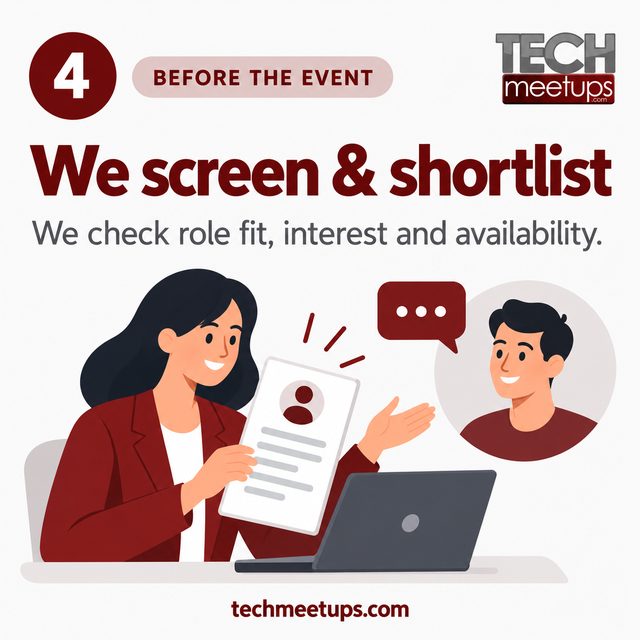
4. We screen & shortlist
- What you do: Review the shortlist and matching report for your roles when they are ready.
- What we do: Our team checks candidates for role fit, current interest and availability. The aim is a shortlist of relevant people, not a long list of names. The result is the matching report for your roles.
- Why it helps: Shortlisted people have been checked for interest and availability, so you can spend your time on real conversations rather than on sorting through profiles.
Tip: Read the report with your hiring manager. For instance, mark each candidate as interested, maybe or not now, and note one question you would like to ask each of them. That makes the next step much easier.
Meeting your candidates
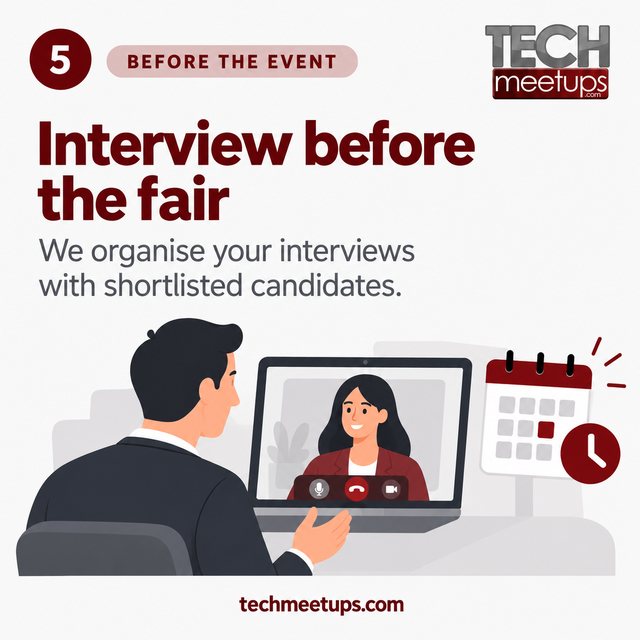
5. Interview before the fair
- What you do: Depending on your package, you choose whom you would like to interview before the fair.
- What we do: We organise your interviews with shortlisted candidates and coordinate your pre-event conversations. Other matched candidates can meet you at the fair or afterwards.
- Why it helps: A first conversation before the event means you walk into the fair already knowing some of the people you will meet. You can use the day to continue those conversations and to meet others, instead of starting from zero.
Tip: Prepare a short list of questions in advance. For instance, a software company might ask about the candidate’s recent projects, the tools they enjoy using, and what kind of team they want to join. Keep it friendly and informal for a first chat.
6. Meet your candidates

- What you do: Attend the fair, meet the people you have already interviewed, continue the conversation face to face and decide whom to progress. There is room for new introductions on the day too.
- What we do: Your earlier steps lead to this point. The fair is where you meet the people you have already interviewed, with room for new introductions as well.
- Why it helps: Meeting someone you already know is easier than a first meeting at a busy stand. You can talk about the role in more depth, and the candidate can ask better questions about your company.
Tip: Bring something simple to share. For instance, a one-page description of your open roles, or a team member who works in the role, can help candidates picture the job. Note the names of the people you meet while the conversation is still fresh.
7. Follow up & hire

- What you do: After the fair, you progress interviews and make offers. Your team makes the final hiring decisions.
- What we do: We support your follow-up interviews, and you review the outcomes with us.
- Why it helps: A good first meeting can be lost if nobody follows up. A clear next step soon after the fair keeps candidates interested and keeps your own hiring moving.
Tip: Reach out within a few days, while the fair is still fresh. For instance, send each candidate a short message thanking them for their time, saying what you liked about the conversation and proposing a next step, such as a second interview.
Why start before the fair?
A job fair is a short day, so preparation matters. With Talent Matching, you share your roles in advance, we do the first round of searching and screening, and you decide whom you would like to speak to. That means less time sorting through profiles and more time in real conversations with relevant people.
It also keeps things simple. You tell us what you are looking for, we handle the matching and shortlist, and you decide whom you would like to speak to.
What to expect
Talent Matching is designed to save you time and help you meet better-prepared candidates. We cannot promise interviews or hires, because that depends on your roles, the candidates available and the choices you and they make. What you can expect is a clear, structured process, from sign-up to follow-up.
Prefer to read it offline or share it with your team? Download the TechMeetups How it works PDF.
Ready to start?
What roles are you hiring for?
Choose your event, share your open roles and let TechMeetups help you meet the right people.